Harvest is Driven by Local Sourcing
Reflecting on what inspired him to open Harvest, Rick explains, "It’s really Chef Andrea's fault," he laughs. "No, I mean, I think that with a certain amount of success and kind of what we've done over time as restaurateurs and as chefs, we saw this food movement, and we really believed that we could not only be a part of that food movement but really lead that food movement."
This question led them to local farmers who could provide high-quality, flavorful produce. "From that, just really realizing that the best way to do that is from a local standpoint," Rick continues. "As we started to go down this path, a lot of other things kind of started landing on a table that we had common values about: our carbon footprint, spending more money locally."
Rick’s commitment to local sourcing wasn't just about flavor; it was about supporting the community. "How do you spend money in your community? When you take all the layers off of it, how do you spend money locally, and how do you source more intentionally?" he asks. By focusing on local sources, Rick and his team aimed to reduce their carbon footprint and support local businesses. They sought to build relationships with local artisans who could provide everything from the tables and booths in their restaurant to the artwork on the walls.
Keeping it Fresh with Seasonal Menus at Harvest
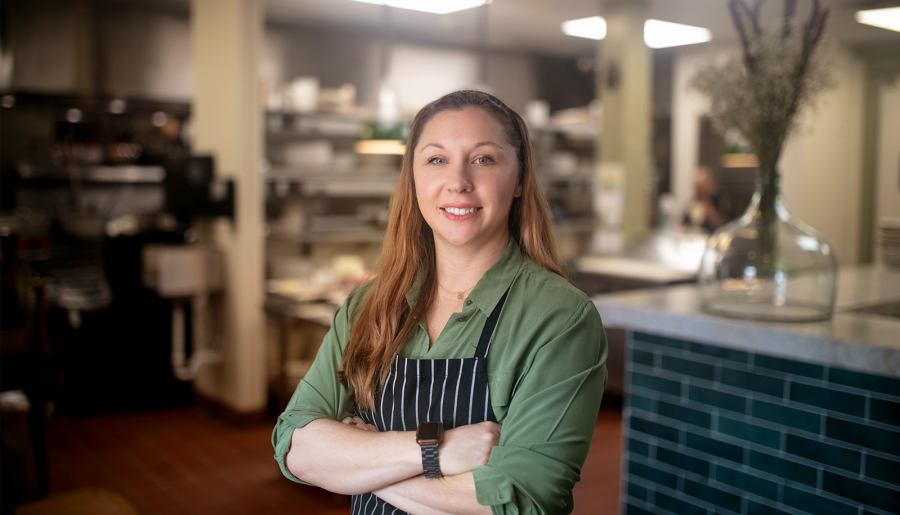
Andrea Shackleford, the head chef, echoes Rick's sentiments. "We had a restaurant before Harvest called Sauce, and we loved the concept for what it was. But there was a certain point where we were like, 'All this product that we bought, we have no idea who it came from.'" The realization that they could source locally and know exactly where their food came from was a turning point. "We did a farm dinner one, and that kind of just sparked it for us," Andrea recalls. "We were kind of like, 'We need to be doing this more. This kind of needs to be what we do because we were passionate about it.'"
For Rick, the focus on local sourcing was also about reconnecting with his roots. "If I get a tomato from California, that seed and that product have been grown to travel 2,000 miles," he says. "Peaches are not very peachy anymore because we've kind of fixed it where they can travel 2,000 miles and they can sit on a shelf for a long time. But man, they don't taste like that peach did 40 years ago." This drive to recapture the flavors of his childhood led Rick to partner with local farmers and ranchers to grow better products. "We are consistently talking with chefs, with farmers. We will even plan what we plant our greenhouse for what we will need each season," he says, illustrating their hands-on approach.
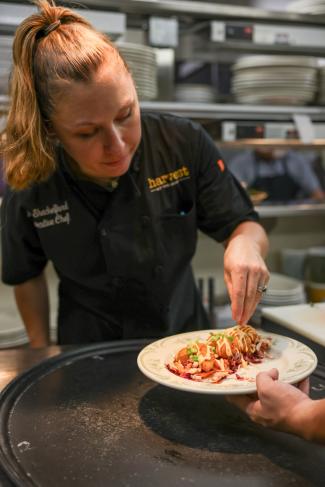
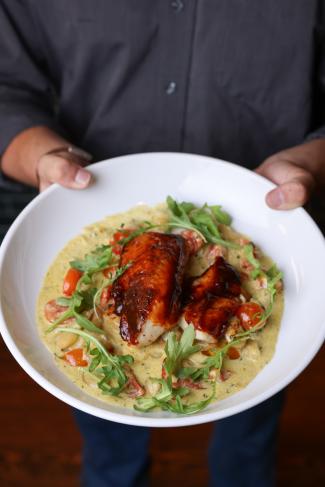
Andrea Shackleford, the executive chef, explains how this commitment to local sourcing influences the menu at Harvest. "We change our menu four times a year. We try to be as seasonal as possible," she says. "We know what's growing and when it will be available. We know cabbages, Brussels sprouts, and kale are available in the spring. If that's what's available right now, that is what we have on our menu." This seasonal approach ensures that the ingredients are fresh and flavorful, reflecting the best of what local farmers have to offer.
Harvest Bar Team and Chef Partner on Flavors
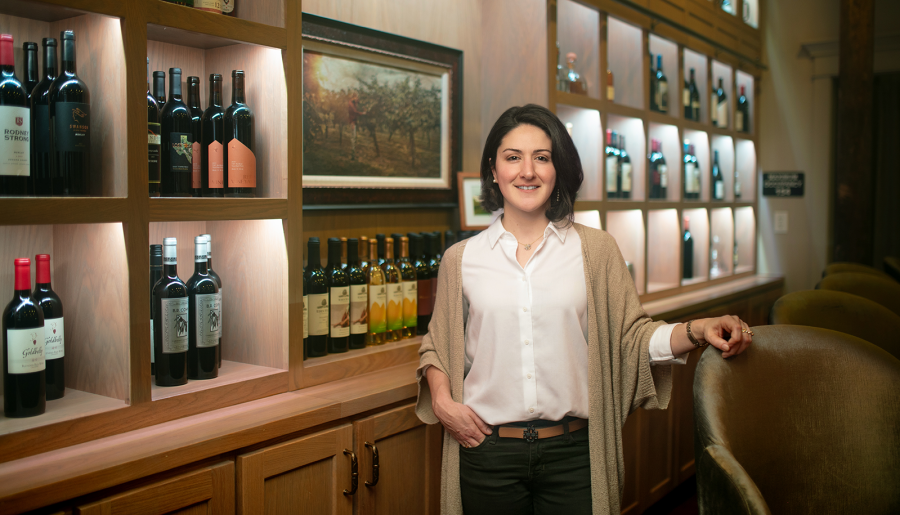
The dedication to local sourcing extends beyond the kitchen. Sanam highlights how their bar menu also reflects this philosophy. "Our bar team works very closely with Chef in creating those flavor profiles on the cocktails," she says. "We've been lucky to have both a creative team on our bar who push the envelope on techniques and keep educating themselves using ingredients that are available to us and working with Chef." To add to that, Harvest's commitment to creating an exceptional experience has led them to winning a Wine Spectator Award of Excellence for their exceptional wine list.
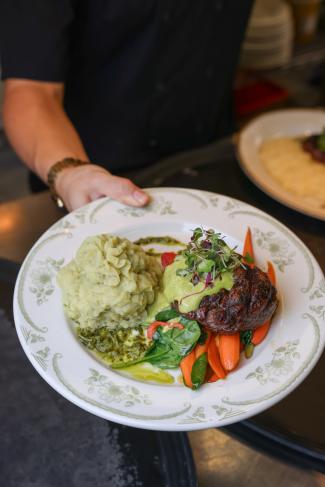
Rick's favorite meal at Harvest showcases the culmination of these efforts. "I'm going to start with the beef skewers," he says. "I have beef skewers almost every night. I sit at the back corner of the first-floor bar. I enjoy sitting there and catching the vibe. I also love the ribeye and its vegetables. I just really love the combination of those flavors. The way chef does the vegetables underneath the dish and the depth of flavors is just really, really good." These dishes, made with locally sourced ingredients, remind Rick of the home-cooked meals from his childhood.
For Andrea, the joy of creating seasonal menus is matched by her love for baking. "Whenever we do these dinners, like we have tonight, we have supper with the cause tonight. My favorite thing to do is the dessert course," she says. "I always keep it within the bounds, but I kind of get creative with that a little bit."
Sanam adds, "We just got our hands on a beautiful 20-year-old Armagnac, which hopefully we can showcase on our next supper with a cause with a dessert." This attention to detail and passion for pairing food and drink highlights the collaborative spirit at Harvest.
In essence, Harvest at The Masonic is a reflection of Rick's journey from a farm boy to a successful restaurateur who never forgot the value of local, flavorful food. By reconnecting with his roots and championing local sources, Rick, Andrea, and Sanam have created a dining experience that honors the past while looking forward to a sustainable future. Their mission is clear: to create delicious food that supports the community and reconnects people with the source of their meals.